
Leadership Without the C How to Act Like a Captain Every Day

Updated: 6 days ago
A captain is easy to spot when the jersey has a letter on it. The harder skill is acting like one when nobody has officially named you anything.
Every team has formal leaders. Coaches pick them, teammates vote for them, or tradition points to them. But every strong team also has quiet leaders who set the pace in practice, calm the bench after a bad shift, clean up small mistakes before they become big ones, and bring people back to the standard when emotions run high.
This is a course-style guide for building that kind of leadership. You do not need the “C” on your jersey to act like a captain. You need habits that teammates trust, coaches notice, and pressure cannot shake.
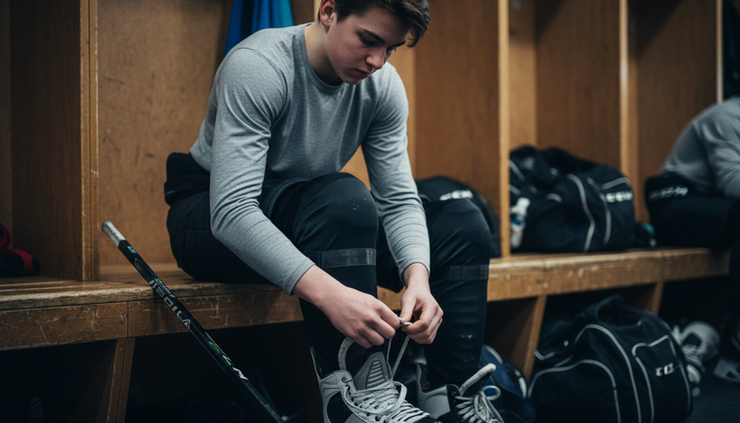
Lesson 1. Lead yourself before you try to lead anyone else
The first test of leadership is private. It happens before practice starts, before the coach talks, before anyone needs a speech.
Self-leadership shows up in small choices:
Getting ready on time
Listening the first time
Finishing drills with effort
Owning mistakes without excuses
Taking care of gear, body, and attitude
A teammate who cannot manage their own habits will struggle to lead others. People may like them, but they will not fully trust them under pressure.
The best unofficial leaders are consistent. They do not need a perfect day to bring good energy. They do not wait for praise to work hard. They do not turn effort on and off based on mood, score, or ice time.
That kind of consistency becomes a signal. Teammates learn, “This person can be counted on.” Coaches learn the same thing.
A simple self-check after every practice helps:
Did I raise the level of the group today?
Did I bring focus or distraction?
Did I respond well when things got hard?
Did I correct myself before someone else had to?
Leadership Without the C How to Act Like a Captain Every Day starts here. If the standard only matters when someone is watching, it is not really your standard yet.
Lesson 2. Make the team better in boring moments
Big leadership moments are rare. The winning goal, the pregame speech, the emotional comeback, those moments get remembered. But teams are built in the boring parts.
The best leaders take ordinary moments seriously.
They are ready when the coach starts the drill. They help collect pucks without being asked. They give a quick tap to a teammate who is frustrated. They listen during video. They repeat instructions to someone who missed them. They do not need every job to feel important before doing it well.
These small actions matter because teams are emotional systems. One player’s attitude can spread. So can focus. So can laziness.
If one person cuts a corner, others notice. If one person races to the line for the next rep, others notice that too.
Leadership often looks less like a speech and more like being the first one ready for the next rep.
A player without a letter can change the tone of a whole practice by treating details like they matter.
Try this for one week. Pick one boring moment each day and do it like a captain would.
Examples:
Be first to the huddle
Thank the goalie after a tough drill
Put away equipment without being told
Encourage a teammate during conditioning
Stay locked in during instruction
At first, nobody may say anything. That is fine. Leadership is not performance. It is service repeated until it becomes part of who you are.

Lesson 3. Speak in a way people can receive
A captain’s voice is not always the loudest one. It is the clearest, most useful one.
Some players think leadership means calling people out. Sometimes a team does need direct honesty. But direct does not have to mean careless. If the goal is to help the team improve, the words have to land.
Good leaders think before they speak. They ask:
Is this the right time?
Is this about the team or my frustration?
Would I accept this message if someone said it to me?
Can I say it in a way that helps the person move forward?
There are moments for energy. “Let’s go, next puck!” can lift the bench. There are moments for calm. “We’re fine, get the next shift,” can stop panic. There are moments for correction. “We need to track back harder,” can refocus the group.
The key is to speak for the standard, not for your ego.
Try using short, useful phrases:
“Next shift.”
“Stay with it.”
“We need everyone here.”
“Good response.”
“I’ve got you.”
“Let’s clean that up.”
These phrases work because they are simple. Under pressure, people do not need a lecture. They need a clear cue.
Also, know when not to speak. If a teammate is angry after a mistake, they may not be ready for advice. A quiet tap on the shin pads may help more than a speech. Later, away from the heat of the moment, a short conversation can do more good.
Strong leaders do not use words to prove they are leaders. They use words to make the next play better.
Lesson 4. Handle mistakes like a captain
Every player makes mistakes. A bad turnover. A missed assignment. A penalty at the wrong time. A poor attitude after being corrected.
Leadership shows in the next response.
A player who blames the ice, the ref, the coach, a teammate, or bad luck teaches the team to avoid responsibility. A player who owns the mistake teaches the team to recover.
Owning it can sound simple:
“That one is on me.”
“I’ll fix it.”
“I lost my man.”
“I need to be sharper there.”
No drama. No long apology. No self-pity. Just ownership and a better next action.
This matters because teams cannot grow when everyone protects themselves. Trust builds when people can admit what happened without falling apart.
The same rule applies when someone else makes a mistake. Acting like a captain means refusing to pile on. If a teammate knows they messed up, making them feel smaller does not help. The better response is to pull them back into the game.
Say, “You’re good. Get the next one.”
Then expect better. Support and standards can exist together.
Three steps help after any mistake:
Name it
Be honest about what happened.
Reset
Take a breath, get your focus back, and stop replaying it.
Make the next right play
Win a puck, finish a check legally, talk in the defensive zone, or make a simple pass.
Captains do not avoid errors. They shorten the time between the error and the response.

Lesson 5. Build trust when no reward is attached
Trust is the real currency of leadership. A letter on a jersey may give someone authority, but trust gives that authority meaning.
Teammates trust players who tell the truth, work hard, and care about the group. They trust players who act the same around stars, rookies, goalies, injured players, and coaches. They trust players who do not use private information as locker room entertainment.
Trust also grows when you notice people.
A teammate who has been quiet all week may need someone to ask how they are doing. A younger player may need help understanding a drill. A goalie who faced a rough practice may need a reminder that the team sees their effort.
These are not soft extras. They are part of team strength.
A connected team can handle more pressure because players do not feel alone inside mistakes or slumps. They know someone has their back, and they know the standard still matters.
Ways to build trust every day:
Keep private conversations private
Give credit out loud
Take responsibility quickly
Include quieter teammates
Compete hard without disrespecting people
Follow through when you say you will do something
Trust grows slowly. It can also break quickly. The unofficial leader protects it.
Lesson 6. Compete without becoming selfish
Competitive fire is a gift when it serves the team. It becomes a problem when it only serves personal pride.
A captain-like player wants to win drills, battles, shifts, and games. They hate losing. But they do not make everything about themselves. They can compete hard and still listen. They can be intense without blaming everyone else. They can want more ice time while still supporting the person who gets the next shift.
That balance separates maturity from emotion.
If you want to act like a captain, ask this during competition:
Is my intensity helping the team?
Am I making the group sharper or tighter?
Am I responding to coaching or resisting it?
Am I creating energy or tension?
There will be times when a team needs a spark. Bring it. Finish the drill hard. Backcheck all the way. Win the wall battle. Be vocal on the bench. But keep your fire pointed at the right target.
The target is the standard.
Not the teammate who made a mistake. Not the coach who corrected you. Not the referee who missed a call. Not your own frustration.
Great teammates can feel your competitiveness and still feel safe around you. That is a powerful mix.
Lesson 7. Be coachable when it is uncomfortable
Anyone can accept praise. Leaders accept correction.
Coachable players do not treat feedback like an insult. They treat it like information. That does not mean every correction feels good. It often stings, especially in front of teammates. But the response matters more than the feeling.
A coachable response looks like this:
Make eye contact
Listen fully
Ask a short question if needed
Say, “Got it”
Try the correction right away
The worst response is body language that says, “I am above this.” Eye rolls, slumped shoulders, muttering, stick slams, and slow skates back to the line send a message. The message is that pride matters more than improvement.
A player without a letter can lead by taking coaching well. When one respected teammate responds with maturity, others often follow.
Coachable does not mean silent forever. If something is unclear, ask. If a conversation needs to happen, have it at the right time and in the right tone. But during practice or games, show the group how to receive correction and move.
That skill helps far beyond sports too. People who can hear hard feedback without breaking trust become valuable in any setting.

Lesson 8. Create your daily captain standard
Leadership becomes easier when it turns into a repeatable standard. You do not need to wake up and wonder, “How do I lead today?” Build a simple checklist and live it.
Use this five-part daily captain standard:
Standard | What it looks like |
Be ready | Arrive prepared, focused, and on time |
Bring energy | Add effort without needing attention |
Communicate | Speak clearly, listen well, and help teammates reset |
Own mistakes | Take responsibility and make the next right play |
Protect trust | Treat people with respect when pressure rises |
This checklist is simple on purpose. If it gets too complicated, it will not last.
At the end of each day, give yourself a score from 1 to 5 in each area. Do not use it to beat yourself up. Use it to notice patterns.
If your energy drops every time you are tired, train that. If your body language slips after correction, train that. If you avoid speaking when the team needs a voice, train that too.
Leadership is a skill. Skills improve with reps.
What acting like a captain looks like over time
At first, your leadership may feel invisible. You may wonder if anyone notices. Keep going.
Over time, teammates start looking to you during hard moments. Coaches trust you with responsibility. Younger players copy your habits. The bench feels steadier because you are on it. The locker room gets better because you help set the tone.
That is real leadership.
The letter on the jersey matters. It is an honor. But the behavior matters more. Teams need more than one person carrying the standard. They need players throughout the room who take ownership without waiting for permission.
So start with the next practice. Be early. Work honestly. Speak with purpose. Own your mistakes. Lift someone else. Compete the right way.
Act like the captain the team needs, even before anyone gives you the letter.


